
Survival Guides: A Comprehensive Plan
Navigating the wilderness demands preparation; mastering crucial skills like first aid, shelter building, and foraging ensures resilience. Understanding hazards,
securing sustenance, and maintaining mental fortitude are paramount for survival, alongside essential gear knowledge.
I. Foundational Survival Skills
Establishing a solid base of core competencies is vital for wilderness survival. This begins with first aid essentials – recognizing and treating injuries, performing CPR, and managing medical emergencies are non-negotiable skills. Equally important is shelter construction basics; knowing how to build a protective barrier against the elements, utilizing natural materials, can be life-saving.
Furthermore, water procurement & purification is paramount. Locating water sources and rendering them safe for consumption through boiling, filtration, or purification tablets prevents dehydration and illness. These foundational skills – medical knowledge, shelter, and hydration – form the bedrock of any successful survival strategy, enabling individuals to endure challenging conditions and increase their chances of rescue or self-extraction. Mastering these basics provides confidence and a crucial advantage in unpredictable environments.
First Aid Essentials
Proficiency in first aid is arguably the most critical survival skill. Recognizing the early signs of life-threatening conditions, such as hypothermia – uncontrollable shivering or its sudden cessation, alongside confusion and slow movement – can be decisive. Knowing how to administer CPR is equally vital, potentially becoming necessary in severe cases.
A comprehensive first aid kit should include bandages, antiseptic wipes, pain relievers, and tools for splinting fractures. Beyond the kit, understanding wound care, treating burns, and managing sprains are essential. Practicing these skills beforehand builds confidence and ensures a swift, effective response when faced with an emergency. Prioritizing immediate medical attention significantly increases the chances of a positive outcome in a survival scenario, potentially saving a life.

Shelter Construction Basics
Protection from the elements is paramount for survival, making shelter construction a foundational skill. A basic shelter should provide insulation from cold, wind, and rain, conserving vital body heat. Lean-tos, utilizing natural features like rock overhangs or fallen trees, are relatively simple to construct. Debris huts, built with branches and covered in leaves or pine needles, offer excellent insulation.
Prioritize location – avoid areas prone to flooding or rockfall. Effective shelters minimize heat loss and maximize protection. Learning to build different types of shelters, adapting to available resources, is crucial. Consider factors like prevailing winds and sun exposure. A well-constructed shelter dramatically improves comfort and increases the chances of surviving exposure, especially during prolonged wilderness stays.
Water Procurement & Purification
Access to potable water is non-negotiable for survival; dehydration can quickly become life-threatening. Identifying water sources – springs, streams, rainwater – is the first step. However, untreated water often harbors harmful bacteria and parasites, necessitating purification. Boiling water for at least one minute effectively kills most pathogens.
If boiling isn’t feasible, purification tablets or filters offer viable alternatives. Constructing a makeshift filter using charcoal, sand, and gravel can remove sediment, though it won’t eliminate all microorganisms. Collecting dew or rainwater provides relatively clean sources. Prioritize finding and purifying water consistently, even before feeling thirsty, to maintain optimal physical and cognitive function during a survival scenario.
II. Understanding Environmental Hazards
The wilderness presents numerous dangers beyond simply getting lost; recognizing and mitigating these threats is crucial for survival. Hypothermia, a potentially fatal condition, demands immediate attention – recognizing early signs like uncontrollable shivering or confusion is paramount. Avalanche terrain requires specialized knowledge; preparedness includes transceivers and understanding snowpack stability;
Dangerous wildlife encounters are also a significant risk. Identifying animal tracks and understanding their behavior can help avoid conflict. Knowing how to react to encounters with predators or venomous creatures is essential. Being aware of the specific hazards present in your environment – from extreme temperatures to flash floods – allows for proactive risk management and increases your chances of a safe outcome.
Hypothermia: Recognition & Treatment
Hypothermia, a dangerous drop in body temperature, can quickly become life-threatening in outdoor environments. Recognizing early symptoms is vital: uncontrollable shivering is a primary indicator, but its cessation can also signal severe hypothermia. Confusion, slow and slurred speech, and loss of coordination are further warning signs.
Immediate treatment involves removing the individual from the cold, removing wet clothing, and providing insulation. Warm, dry coverings are essential. If conscious, offer warm, sugary drinks – never alcohol or caffeine. In severe cases, CPR may be necessary. Seeking professional medical attention is crucial, even if the individual appears to recover. Prevention, through appropriate clothing and shelter, remains the best defense.

Avalanche Safety & Survival
Avalanches represent a swift and deadly natural hazard, demanding respect and preparedness. Survival hinges on proactive measures and quick reactions. Before venturing into avalanche terrain, check current avalanche forecasts and understand the risks. Essential equipment includes an avalanche transceiver, shovel, and probe – and knowing how to use them effectively is paramount.
If caught in an avalanche, attempt to swim with the flow, keeping your airway clear. As the avalanche slows, create an air pocket by bringing your hands to your mouth. Once buried, remain calm and try to orient yourself. Time is critical; survival chances diminish rapidly after just five minutes. Rescue relies on transceivers and efficient probing, emphasizing the importance of traveling with a partner and informing someone of your plans.
Identifying & Avoiding Dangerous Wildlife
Encountering wildlife in the wilderness is inevitable, but minimizing risk requires knowledge and caution. Learn to identify potentially dangerous animals in the region you’re exploring – bears, mountain lions, venomous snakes, and others. Understanding their behavior patterns is crucial for avoidance. Make noise while hiking to alert animals to your presence, giving them time to move away.
Store food properly in bear-resistant containers or hang it from a tree, preventing attraction. Never approach or feed wildlife. If you encounter a dangerous animal, remain calm, make yourself appear large, and slowly back away. Carry bear spray where appropriate and know how to use it. Awareness of surroundings and proactive measures are key to safe wildlife interactions, ensuring a peaceful coexistence in the wild.
III. Food & Sustenance in the Wild
Sustaining energy levels is vital for survival, demanding resourcefulness in acquiring food. Foraging for edible plants requires precise identification skills – avoid anything unfamiliar, as misidentification can be fatal. Supplementing gathered plants with protein is crucial; mastering basic trapping techniques, like constructing deadfalls or snares, can provide essential sustenance.
Fishing offers another valuable food source. Simple methods, utilizing a line, hooks, and natural bait, can yield results. Practice these skills in controlled environments before relying on them in a survival situation. Remember to prioritize safety and conservation when harvesting resources. Understanding local regulations and practicing responsible foraging ensures long-term sustainability and minimizes environmental impact.
Foraging for Edible Plants
Successfully foraging demands meticulous plant identification; consuming the wrong plant can have severe consequences. Prioritize learning a few easily recognizable, safe plants in your region before attempting broader foraging. Focus on plants with clear, unambiguous characteristics to minimize risk. Always cross-reference multiple reliable sources before consumption – field guides, expert advice, and established foraging websites are invaluable.
Begin with small test portions to check for allergic reactions or sensitivities. Thoroughly wash all foraged plants to remove dirt and potential contaminants. Remember that plant availability varies seasonally, so adapt your foraging strategy accordingly. Respect the environment by harvesting sustainably, taking only what you need and leaving enough for regeneration and wildlife.
Basic Trapping Techniques
Securing food through trapping requires understanding animal behavior and constructing effective, yet ethical, traps. Begin with simple designs like snares and deadfalls, focusing on areas with visible animal tracks or signs. Snares utilize a noose to capture an animal’s leg, while deadfalls employ a falling weight triggered by the animal. Thoroughly research local regulations regarding trapping, as permits or restrictions may apply.
Camouflage your traps effectively using natural materials to blend them into the surroundings. Regularly check your traps to minimize animal suffering and prevent decomposition. Supplementing your diet with protein from trapping can be crucial, but prioritize responsible and sustainable practices. Practice these skills in controlled environments before relying on them in a survival situation.
Fishing Methods & Gear
Acquiring food from aquatic sources is vital in a survival scenario; mastering basic fishing techniques significantly increases your chances of success. A simple fishing line crafted from cordage, combined with hooks fashioned from bone or metal, can be surprisingly effective. Natural baits like insects, worms, or small crustaceans are readily available in many environments.
Explore various fishing methods, including angling from shore, creating fish traps using woven branches, or even spearfishing in shallow waters. Understanding fish behavior – where they congregate and what they feed on – is crucial. Practice knot tying for secure line connections. Remember to prioritize sustainable fishing practices, taking only what you need to conserve resources. Supplementing your diet with fish provides essential protein and nutrients.
IV. Navigation & Orientation
Maintaining awareness of your location and direction is paramount when lost in the wilderness; effective navigation skills can be the difference between rescue and prolonged hardship. Traditional map and compass navigation remains a cornerstone skill, requiring practice to master declination and terrain association. However, reliance on technology should be tempered with knowledge of natural navigation techniques.
Utilize the sun’s position, star patterns, and natural landmarks to determine direction. Learn to read the terrain – identifying slopes, waterways, and vegetation patterns – to orient yourself. Crucially, understand signaling for rescue, employing methods like building signal fires, creating ground-to-air signals, or utilizing reflective surfaces to attract attention. Prioritize clear communication of your location if possible.

Map & Compass Navigation
Proficiency with a map and compass is a foundational navigation skill, offering reliability independent of technology. Begin by understanding map symbols, scales, and contour lines to interpret terrain accurately. Mastering compass bearings – taking a bearing from a map and to a map – is essential for plotting courses and confirming your direction of travel.
Account for magnetic declination, the difference between magnetic north and true north, to ensure accurate navigation. Practice “terrain association,” matching features on the map to those visible in the landscape. Regularly check your bearing and position, especially in challenging terrain. Remember, consistent practice builds confidence and proficiency, transforming these tools into invaluable survival assets.
Natural Navigation Techniques
When technology fails, observing nature provides alternative navigational cues. The sun’s path offers a general east-to-west direction, though accounting for the time of day is crucial. Moss often grows more abundantly on the north side of trees in the Northern Hemisphere, though this isn’t always reliable. Observing prevailing wind patterns can indicate direction, as can the growth patterns of branches – often fuller on the sun-facing side.
Star patterns, particularly the North Star, provide a fixed point for determining north. Understanding animal trails can sometimes lead to water sources or established routes. However, remember these methods are less precise than map and compass navigation and should be used as supplementary tools, requiring careful observation and critical thinking.
Signaling for Rescue
Effective signaling dramatically increases your chances of being found. Creating visual signals is paramount; three of anything – fires, piles of rocks, or flashes of a mirror – universally indicates distress. Utilize a signal mirror to reflect sunlight towards potential rescuers, even at great distances. Brightly colored clothing or materials spread in an open area enhance visibility from the air.
Whistles carry sound further than the human voice and require less energy. If possible, build large ground-to-air signals using contrasting materials like rocks on sand or branches on snow. Knowing the frequency of search and rescue operations in your area can inform your signaling strategy. Conserve energy while signaling, and maintain hope – persistence is key to attracting attention.
V. Advanced Survival Techniques
Elevating your skillset beyond the basics significantly improves long-term survival prospects. Mastering multiple fire-starting methods – friction-based techniques, flint and steel, and utilizing magnifying lenses – ensures success in diverse conditions. A comprehensive understanding of knot tying is crucial; learn essential knots like the bowline, square knot, and taut-line hitch for shelter construction, gear repair, and securing loads.
Advanced wilderness first aid expands your capabilities, encompassing wound management, splinting fractures, and recognizing/treating more severe medical emergencies. Practicing these skills regularly builds confidence and proficiency. Remember, advanced techniques require dedicated practice and a solid foundation in fundamental survival principles. Continuous learning is vital for preparedness.
Fire Starting Methods (Multiple Techniques)
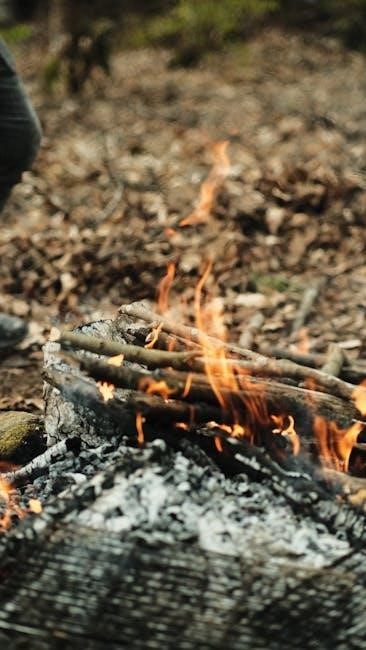
Reliable fire-starting is paramount for warmth, cooking, signaling, and psychological comfort in a survival scenario. Proficiency extends beyond matches; mastering friction-based methods like the bow drill or hand drill demands practice and suitable materials. Flint and steel offer a dependable spark source, requiring char cloth to catch the ember. Utilizing a magnifying glass focuses sunlight, effective in clear conditions.

Understanding tinder selection – dry grasses, birch bark, or cotton balls with petroleum jelly – is crucial for catching initial sparks. Building a proper fire lay, starting with tinder, then kindling, and finally fuel wood, ensures sustained combustion. Practice these techniques in varied environments to build confidence and adaptability. Remember, fire safety is paramount; clear a firebreak and never leave a fire unattended.

Knot Tying for Survival Applications
Proficiency in knot tying is fundamental for countless survival tasks, from shelter construction to gear repair and securing loads. The square knot, reliable for joining ropes of equal diameter, is essential, but understand its limitations – it can slip under heavy strain. The bowline creates a secure loop that won’t tighten, ideal for rescue situations or creating anchor points.
The taut-line hitch allows adjustable tension, perfect for tent guy lines or creating a clothesline. Mastering the clove hitch provides a quick and secure attachment to poles or rings. Practice tying these knots repeatedly until muscle memory takes over, enabling rapid execution in stressful situations. Knowing when and how to apply each knot significantly enhances your self-reliance in the wilderness.
Wilderness First Aid – Advanced Procedures
Beyond basic first aid, advanced wilderness procedures demand a deeper understanding of trauma management and prolonged care scenarios. Recognizing and treating severe bleeding requires direct pressure, elevation, and potentially tourniquet application – knowing proper technique is crucial to avoid further harm. Splinting fractures using improvised materials stabilizes injuries, preventing exacerbation during evacuation.
Managing potential spinal injuries necessitates immobilization and careful handling. Understanding signs of internal injuries, like abdominal pain or bruising, guides appropriate monitoring. CPR, a life-saving skill, becomes even more vital when professional help is delayed. Advanced training equips you to assess, stabilize, and potentially sustain an injured individual until rescue arrives, significantly increasing survival chances.
VI. Psychological Preparedness
Survival isn’t solely physical; a robust mental state is equally critical. Maintaining a positive attitude, even amidst adversity, fuels resilience and clear thinking. Stress management techniques – deep breathing, mindfulness, or focusing on achievable tasks – combat panic and improve decision-making. Acceptance of the situation, rather than denial, allows for pragmatic problem-solving.
Decision-making under pressure requires prioritizing needs and avoiding impulsive actions. Break down overwhelming challenges into smaller, manageable steps. Cultivate self-confidence in your abilities and trust your instincts. Remembering loved ones or focusing on future goals can provide motivation. Psychological preparedness transforms a potentially devastating situation into a challenge you can overcome.
Maintaining a Positive Mental Attitude
In a survival scenario, your mindset is a powerful tool. Cultivating optimism isn’t about ignoring the severity of the situation, but about choosing to focus on solutions rather than dwelling on problems. A positive outlook enhances problem-solving abilities and boosts energy levels, crucial when facing exhaustion and fear. Visualize success, recalling past accomplishments to reinforce self-belief.
Practice gratitude, acknowledging even small comforts. Break down overwhelming tasks into achievable steps, celebrating each milestone. Avoid negative self-talk and replace it with affirmations. Remembering loved ones and focusing on future goals can provide powerful motivation. A resilient spirit dramatically increases your chances of navigating adversity and ultimately, survival.
Stress Management in Survival Situations
Survival situations inherently induce intense stress, impacting judgment and physical capabilities. Effective stress management is therefore paramount. Deep, controlled breathing exercises can quickly calm the nervous system, reducing panic and improving focus. Prioritize tasks, addressing immediate needs first to create a sense of control.

Mindfulness techniques, such as focusing on sensory details – the feel of the ground, the sound of the wind – can ground you in the present moment, diminishing anxiety. Establish a routine, even a simple one, to provide structure and normalcy. Accept what you cannot change and concentrate on what you can influence. Recognize your limitations and don’t hesitate to rest when needed; exhaustion exacerbates stress.
Decision-Making Under Pressure
In survival scenarios, swift and sound decisions are critical, yet pressure impairs cognitive function. Employ a systematic approach: assess the situation calmly, identifying immediate threats and available resources. Prioritize needs – shelter, water, fire – and formulate multiple potential solutions.
Consider the potential consequences of each option, weighing risks against benefits. Avoid impulsive reactions; a brief pause for evaluation can prevent costly errors. Delegate tasks if possible, leveraging the strengths of any companions. Trust your instincts, but validate them with logical reasoning. Remember that imperfect action is often better than paralyzed inaction. Continuously reassess your decisions as circumstances evolve, adapting your strategy as needed.
VII. Essential Gear & Equipment
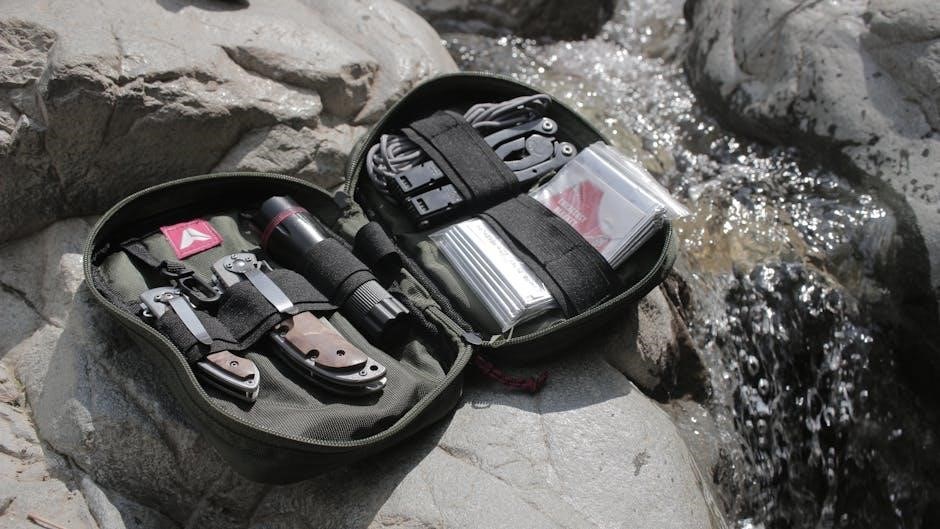
A well-curated survival kit is paramount, extending your capabilities and mitigating risks. Begin with the basics: a robust knife, fire starter (multiple methods are ideal), water purification tablets or filter, and a signaling device like a whistle or mirror. Include a first-aid kit tailored to wilderness injuries, along with navigation tools – map and compass – and a headlamp with extra batteries.
Clothing choices are equally vital; prioritize layers for adaptability to changing conditions. Durable, waterproof outerwear is essential. Regularly inspect and maintain your gear, repairing any damage promptly. Familiarize yourself with the operation of each item before needing it. Consider specialized equipment based on your environment, such as an avalanche transceiver in snowy regions.
Building a Survival Kit
Constructing a comprehensive survival kit is a foundational step in preparedness, offering vital resources when facing unexpected challenges. Prioritize a sturdy, waterproof container to protect contents. Essential inclusions are a high-quality knife, multiple fire-starting methods (lighter, ferro rod), and water purification tools – tablets or a filter are crucial. A comprehensive first-aid kit, tailored for wilderness injuries, is non-negotiable.
Navigation tools – a map and compass – alongside a signaling device (whistle, mirror) are vital for rescue. Include high-calorie, non-perishable food, a headlamp with extra batteries, and cordage. Don’t forget essential repair items like duct tape and a multi-tool. Regularly inspect and replenish your kit, ensuring all items are functional and within their expiration dates.
Choosing Appropriate Clothing for the Environment
Selecting the right clothing is paramount for regulating body temperature and protecting against the elements in a survival scenario. Avoid cotton, as it retains moisture and leads to rapid heat loss. Instead, prioritize layers of synthetic or wool materials, offering insulation even when wet. A waterproof and windproof outer shell is essential for protection against precipitation and harsh winds.
Consider the specific environment: colder climates demand insulated jackets, hats, and gloves, while warmer regions require breathable, lightweight fabrics. Sturdy, waterproof boots are crucial for foot protection and mobility. Pack extra socks to maintain foot warmth and prevent blisters. Proper clothing minimizes the risk of hypothermia or overheating, significantly enhancing survival prospects.
Maintaining & Repairing Survival Gear
Regular maintenance extends the lifespan and reliability of your survival equipment, potentially saving your life. Inspect gear frequently for wear and tear – check seams, zippers, and buckles. Clean and dry items thoroughly after each use to prevent corrosion or mildew. Sharpen knives and blades regularly for optimal performance.

Carry a repair kit including duct tape, cordage, a needle and thread, and multi-tool. Learn basic repair techniques, such as patching fabric, replacing broken buckles, and tightening loose screws. Knowing how to improvise repairs with available materials is also crucial. Proactive maintenance and repair skills ensure your gear remains functional when you need it most, increasing your self-reliance in a survival situation.