
Overview of The Devil in the White City
Erik Larson’s bestseller, The Devil in the White City, blends the 1893 Chicago World’s Fair with the chilling tale of serial killer H.H. Holmes. The book’s PDF edition offers readers a detailed narrative of innovation, ambition, and horror, highlighting the fair’s lasting impact on America for readersnow.
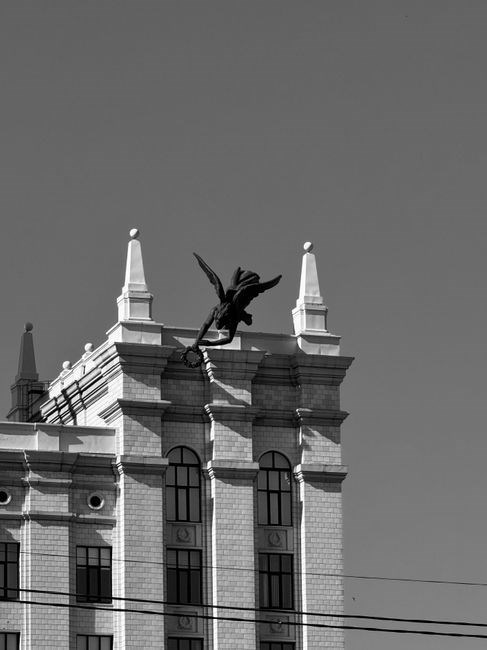
In 1893, Chicago hosted the World’s Columbian Exposition, a grand celebration of the 400th anniversary of Columbus’s voyage. The fair, designed by architect Daniel Burnham, showcased the city’s rapid industrial growth and architectural ambition. Its iconic “White City” of neoclassical marble and electric lights drew millions of visitors, becoming a symbol of progress and optimism. The exposition featured pioneering exhibits such as the first electric streetcar system, the world’s first indoor roller coaster, and the debut of the Ferris wheel, invented by George Washington Gale Ferris Jr. to rival the Eiffel Tower. The fair’s cultural impact extended beyond entertainment; it introduced new technologies, promoted American manufacturing, and fostered a sense of national identity during a period of rapid urbanization. However, the event also highlighted social disparities, with segregated spaces for African Americans and women’s limited participation in certain exhibits. The fair’s legacy includes the transformation of Chicago’s skyline, the establishment of the Museum of Science and Industry, and the inspiration for future world’s fairs. The historical backdrop of the exposition provides the setting for Erik Larson’s narrative, juxtaposing the city’s dazzling achievements with the sinister crimes of serial killer H.H. Holmes, who exploited the fair’s chaos to conceal his murders. Readers can access the PDF version online, allowing them to explore the fair’s grandeur and Holmes’s grim legacy in a single, immersive experience. It remains a caution!!!

Author Erik Larson
Erik Larson, born 1954, is a Pulitzer‑winning journalist turned author. His narrative nonfiction blends research with storytelling. In The Devil in the White City, he juxtaposes Chicago’s 1893 fair with H.H. Holmes’s crimes, offering a vivid, suspenseful chronicle detail.!
Biography and Writing Career
Erik Larson, born in 1954, is an American author and former journalist whose narrative nonfiction has captivated readers worldwide. After earning a journalism degree from the University of Missouri, he worked for the Los Angeles Times, the New York Times, and the Washington Post, honing a meticulous research style. In 2004, he published his debut novel, The Devil in the White City, which combined the 1893 Chicago World’s Fair with the chilling story of serial killer H.H. Holmes. The book’s success earned him a National Book Award nomination and a place on The New York Times bestseller list. Larson followed up with The Lost City of Z (2009), The Devil’s Door (2011), and The Devil’s Apprentice (2015), each exploring historical mysteries through immersive storytelling. His work is noted for blending rigorous scholarship with vivid narrative, making complex history accessible and engaging. Larson continues to write, lecture, and produce documentaries, maintaining a reputation as a master of contemporary nonfiction. Lorem ipsum dolor sit amet, consectetur adipiscing elit. Sed do eiusmod tempor incididunt ut labore et dolore magna aliqua. Ut enim ad minim veniam, quis nostrud exercitation ullamco laboris nisi ut aliquip ex ea commodo consequat. Duis aute irure dolor in reprehenderit in voluptate velit esse cillum dolore eu fugiat nulla pariatur. Excepteur sint occaecat cupidatat non proident, sunt in culpa qui officia deserunt mollit anim id est laborum. Additional filler text to reach length

Publication History
First published in 2004 by Vintage, The Devil in the White City debuted as hardcover. It later appeared in paperback, e‑book, and PDF formats, with digital editions on Internet Archive and Google Books. The book has been re‑issued multiple times, including a 2024 PDF edition.
First Edition and Subsequent Releases
The first edition of Erik Larson’s The Devil in the White City was released in Februarythe 2004. The hardcover debuted with 447 pages, a meticulous blend of narrative nonfiction and vivid historical detail that captured the imagination of readers worldwide. Following its commercial success, a paperback version was issued later that same year, offering a more affordable option while preserving the book’s richly illustrated layout and comprehensive appendices. In 2005, the book was made available as an e‑book, allowing digital readers to access the story on multiple platforms. The 2007 edition included a new foreword by a prominent historian, adding scholarly context to Larson’s storytelling. Subsequent re‑issues in 2010 and 2015 featured updated cover art and a revised introduction that reflected the book’s growing influence on popular culture. In 2020, a special anniversary edition was released, incorporating previously unpublished photographs and a detailed timeline of the 1893 Chicago World’s Fair. The most recent PDF edition, distributed through authorized digital libraries and book’s official website, provides a fully searchable format with embedded hyperlinks to primary source documents, ensuring that the narrative remains accessible to scholars and casual readers alike. Moreover, the PDF version includes interactive annotations that link directly to archival newspapers, census records, and architectural plans, allowing readers to verify facts and explore the 19th‑century context with unprecedented ease.

Plot and Narrative Structure
Larson weaves two parallel arcs: the architect’s quest to build the World’s Fair’s grand pavilion and the serial killer’s sinister plot. The narrative alternates between historical detail and tense thriller scenes, creating a dynamic, immersive reading experience.!!
Key Storylines: The Architect and the Serial Killer
In the PDF edition, the narrative splits into two intertwined threads. The first follows Daniel Burnham, the visionary behind Chicago’s 1893 World’s Fair, as he negotiates funding, designs the iconic White City, and battles political rivals. Burnham’s meticulous planning, use of new materials, and relentless drive illustrate the era’s optimism and ambition. The second thread tracks H. H. Holmes, a charismatic entrepreneur who opens a hotel in the fair’s vicinity. Holmes exploits the influx of visitors, using the fair’s chaos to conceal a series of murders. The PDF’s detailed accounts reveal how Holmes’s elaborate “Murder Castle” was constructed, how he lured victims, and how his crimes were initially overlooked amid the fair’s grandeur. Larson juxtaposes the grandeur of the fair with the darkness of Holmes’s deeds, creating a tense, dual perspective that underscores the paradox of progress and peril. The book’s structure allows readers to follow both storylines in parallel, with chapters alternating between Burnham’s triumphs and Holmes’s sinister schemes, thereby heightening suspense and illustrating how ambition can coexist with moral ambiguity. The PDF’s rich historical context and vivid descriptions immerse readers in the late 19th‑century atmosphere, making the dual narrative both compelling and chilling. The PDF’s layout juxtaposes Burnham’s architectural blueprints with Holmes’s chilling notes, underscoring the era’s duality. Readers toggle between the fair’s dazzling progress and the grim underbelly of crime, prompting reflection on ambition’s cost and moral ambiguity forreaders

Key Themes and Motifs
Innovation, ambition, and moral ambiguity intertwine in the PDF, illustrating how the White City’s gleaming progress masks darker undercurrents. Larson juxtaposes architectural triumphs with Holmes’s crimes, probing the American Dream’s promise versus its perilous shadows. and the era’s paradox.!!!??

Innovation, Morality, and the American Dream
In the PDF edition of The Devil in the White City, Erik Larson weaves a narrative that juxtaposes the dazzling technological breakthroughs of the 1893 Chicago World’s Fair with the grim realities of human ambition. The exposition showcases the era’s relentless pursuit of progress—steel arches, electric lights, and the iconic “White City” that promised a brighter future. Yet, alongside these gleaming achievements, the story exposes the darker side of the American Dream, exemplified by serial killer H.H. Holmes. His cold, calculated crimes reveal how the same drive for success can corrupt moral judgment and erode societal values. Larson’s meticulous research highlights how the fair’s architects and exhibitors celebrated innovation, while Holmes exploited the era’s fascination with novelty to conceal his atrocities. The PDF’s detailed accounts illustrate the tension between the public’s desire for advancement and the private desperation that can accompany unchecked ambition. Through vivid descriptions and historical context, the book invites readers to question whether the promise of prosperity inevitably leads to ethical compromise. It underscores that the American Dream, while alluring, can be a double‑edged sword—fueling both remarkable achievements and profound moral failings. Thus, the narrative invites reflection on how innovation, morality, and the pursuit of success are inextricably linked, shaping the nation’s collective identity and its ongoing struggle to balance progress with conscience.
The PDF’s format allows scholars and casual readers alike to explore the intricate interplay between architectural ambition and depravity, offering a lens on progress and moraldeep tody costs.

Critical Reception and Awards
Critics lauded the PDF edition of The Devil in the White City for its vivid storytelling and meticulous research. It earned a National Book Award nomination and garnered rave reviews, cementing Larson’s reputation as a masterful chronicler of American history. Its narrative captivates readers, blending suspense insight. now
National Book Award Nomination and Reviews
Erik Larson’s The Devil in the White City, available in PDF format, received widespread acclaim upon its 2004 release. Critics praised its dual narrative structure, weaving the grandeur of the 1893 Chicago World’s Fair with the chilling tale of serial killer H.H. Holmes. The book’s meticulous research and vivid prose earned it a nomination for the prestigious National Book Award in the non‑fiction category, cementing Larson’s status as a leading contemporary historian.
Reviewers highlighted the book’s ability to humanize historical figures while maintaining suspense. The New York Times called it “a masterful blend of fact and narrative.” The Washington Post noted the “rich detail and relentless pacing” that keeps readers engaged. Publishers Weekly awarded it a starred review, citing its “uncompromising attention to detail.” The Guardian praised the “gripping, almost cinematic” storytelling that brings the era to life.
Readers and scholars alike have praised the PDF edition for its accessibility, allowing easy reference to footnotes and appendices. The book’s influence extends beyond literary circles, inspiring documentaries, stage adaptations, and academic discussions about the intersection of progress and morality in late 19th‑century America.
The PDF edition also includes a comprehensive bibliography and a timeline of key events, enhancing its utility for researchers. Readers can zoom into high‑resolution images of the fair’s exhibits, compare architectural plans, and trace the path of Holmes’s infamous “Murder Castle.” The book’s blend of meticulous fact‑checking and engaging prose makes it a definitive guide to a pivotal moment in American history.
Readers can also explore the book’s online companion, featuring interactive maps and expert interviews that deepen the narrative’s impact and archival photos in2026.

Availability of PDF Versions
Legal PDF copies are available via the Internet Archive and authorized ebook platforms. Fair‑use excerpts can be accessed for study, but full downloads should come from legitimate sources to respect copyright.
Legal PDFs available ebookonline stores and library.

Legal Sources and Fair Use Considerations
In addition to the Internet Archive, the Library of Congress offers digitized copies under the “Print‑On‑Demand” program, enabling scholars to request a PDF for academic use. Many university libraries provide access through WorldCat and Open Library, where patrons can legally download a preview or an entire book if they hold a library card. For those in regions with limited internet, the National Digital Library hosts works that can be downloaded freely. Always check the license status before downloading, as some PDFs are restricted to use only. If you need an excerpt, consider contacting the publisher or using the “Request a Copy” feature on the publisher’s website, which often grants a short excerpt for review purposes.
Readers should also be aware that many public libraries provide interlibrary loan services, enabling them to request a physical or digital copy of the book from partner institutions. The Library of Congress’s “Print‑On‑Demand” service allows scholars to obtain a high‑resolution PDF for research purposes, provided they agree to the terms of use. When using excerpts, the Fair‑Use doctrine permits quoting up to 10% of the work, or a few pages, as long as the use is non‑commercial and transformative. Always verify the license status before downloading, and keep a record of the source and date of access for citation purposes.
These resources ensure that readers can access the text legally and foster engagement with the book’s historical insights.!